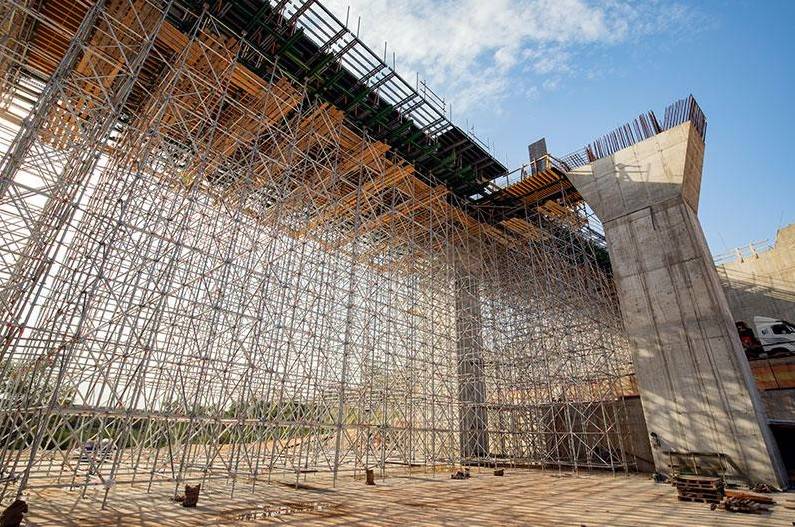
How I Evaluate and Choose Scaffolding Systems That Meet EN74, BS1139, and OSHA Standards

As procurement roles grow more complex in construction and industrial projects, choosing a compliant scaffolding system is no longer just a “product purchase.” It has become a risk-management decision tied to worker safety, regulatory audits, inspection requirements, and long-term project costs.
As a ring lock scaffolding manufacturer and provider of industrial scaffolding services, I meet buyers who often ask the same core question:
“How do I know the scaffolding system truly meets international standards such as EN74, BS1139, and OSHA?”
This article explains how procurement teams can evaluate compliance, what each standard actually means, and how compliant systems reduce risk. The first 80 percent will focus purely on helping you make a better, safer buying decision. Near the end, I will explain how our solutions at SUCOOT help contractors pass inspections and avoid failures.
# Why Compliance Matters for Scaffolding Procurement
When a scaffolding system fails to meet standards, the consequences spread far beyond replacing a few damaged components. Non-compliant scaffolding can lead to:
-
Failed safety audits
-
Delayed project timelines
-
Worker accidents and legal liabilities
-
Insurance claim denials
-
Removal orders from inspectors
-
Costly re-installations
In short: Standards exist so you don’t pay the price of equipment uncertainty.
# Understanding the Major Scaffolding Standards: EN74, BS1139, and OSHA
Below is a procurement-friendly breakdown of what each standard covers and why it matters.
### EN74: Couplers and Fittings Standard (Europe)
EN74 focuses on key connection hardware, including couplers, swivels, and base plates. It defines:
-
Mechanical strength requirements
-
Slip and distortion limits
-
Material testing
-
Dimensional tolerances
Why procurement cares:
If couplers fail, the entire scaffolding structure becomes unstable. EN74 ensures that fittings can endure real-world loads.
### BS1139: Global Benchmark for Scaffolding Systems
BS1139 is widely recognized in Europe, the Middle East, and Asia. It covers:
-
Tube materials
-
Structural strength
-
Welding quality
-
Performance under compression and bending
-
Testing methods
Why procurement cares:
A system built under BS1139 behaves predictably under stress, giving inspectors confidence during project approval.
### OSHA 1926 Subpart L: The U.S. Standard for Working Scaffolds
OSHA defines worker safety and fall-prevention regulations including:
-
Minimum load capacities
-
Guardrail and platform rules
-
Plank requirements
-
Access (ladders, stairs)
-
Erection and dismantling rules
Why procurement cares:
If your project ever undergoes U.S.-based audits, OSHA compliance keeps contractors legally protected.
# Comparison Table: What These Standards Regulate
Below is a simplified reference table for procurement teams evaluating international projects.
| Standard | Scope | Key Requirements | Why It Matters |
|---|---|---|---|
| EN74 | Couplers & fittings | Slip test, bending strength, dimensional limits | Ensures connection integrity |
| BS1139 | Tubes, fittings & complete systems | Structural performance, welding quality, deformation limits | Most widely accepted global benchmark |
| OSHA 1926 | Worker safety & operation | Minimum loads, guardrails, platforms, access rules | Required for U.S. regulatory audits |
These standards overlap but also complement each other. Contractors working internationally often need scaffolding that satisfies all three.
# How Compliant Scaffolding Reduces Project Risk
A compliant scaffolding system offers clear advantages for procurement teams:
1. Faster Inspector Approval
Systems built to EN74/BS1139 reduce back-and-forth with inspectors and minimize the risk of de-installation orders.
2. Lower Accident Risk
OSHA-aligned guardrails, decks, and access ladders significantly reduce falls and structural failures.
3. Long-Term Cost Savings
High-quality couplers, forged steel components, and test-certified parts reduce breakage and replacement costs.
4. Easier Cross-Border Project Alignment
International standards ensure contractors can work in multi-region environments with fewer compliance conflicts.
# The Global Trend Toward Full-System Certification
Recent industry research indicates a shift from “component-level compliance” to “system-level compliance.”
Reference:
https://www.scaffmag.com/2024/03/global-scaffolding-safety-standards-report/
Key trends include:
-
Greater reliance on ring lock scaffolding due to modularity
-
More stringent reporting requirements from government agencies
-
Growth of third-party testing labs for scaffolding materials
-
Increasing legal requirements for traceability and stamped parts
Procurement teams are now expected to document compliance across the whole system, not only individual components.
How I Ensure SUCOOT Products Meet These Standards
In our production process and quality-control system, we align with EN74, BS1139, and OSHA requirements through:
1. Material and Load Testing
Our ring lock rosettes, vertical standards, ledgers, and diagonal braces undergo welding inspections and load tests.
2. Dimensional Accuracy Checks
We control tolerances so components lock smoothly and securely during assembly.
3. Third-Party Certification
External labs review fittings, steel composition, and mechanical strength to add another layer of verification.
4. Global Compatibility Engineering
For contractors working across regions, we design components that align with both European and American compliance frameworks.
These practices make our systems dependable for heavy-duty construction, public infrastructure, industrial towers, and event staging.
Why Contractors Use SUCOOT to Reduce Risk and Pass Inspections
As a ring lock scaffolding supplier, I focus on making procurement decisions easier. Contractors choose SUCOOT because our systems help them:
-
Reduce risk during installation and load-bearing operations
-
Meet international standard requirements
-
Pass third-party inspections smoothly
-
Work with stable, durable components engineered for long service life
Our reliability comes not only from components but from a system-wide approach: material selection, engineering, documentation, QC steps, and project support.
Ready to Choose a Compliant Scaffolding System?
If you are preparing for an upcoming project requiring EN74, BS1139, or OSHA alignment, we can help you evaluate requirements and select the right configurations.